


Canon EOS R8 Mark II Is Here: Stabilisation, Speed, and a Full Redesign
Posted by Photogear on 16th Sep 2026
Canon's compact full-frame gets the upgrade it actually needed.
The EOS R8 Mark II keeps the same pocketable full-frame formula and finally adds in-body stabilisation, smarter autofocus and a much deeper buffer, body-only or bundled with a new everyday kit lens.
Canon has announced the EOS R8 Mark II, a compact full-frame mirrorless camera built for everyday moments and travel stories, for photographers who want serious image quality without a serious amount of bulk. It's available body-only, or bundled with the new RF 24-50mm f/4.5-6.3 IS STM Lens, a lightweight everyday zoom that covers wide-angle to normal focal lengths straight out of the box. Here's what's actually changed since the original R8, and which configuration suits how you shoot.
Choose your R8 II
Body-only if you're already covered on RF glass, or bundled with a genuinely useful everyday zoom if you're starting from scratch.


Key features
- Sensor and processor: 24.2MP full-frame CMOS sensor with a DIGIC X processor.
- Stabilisation: 5-axis in-body stabilisation rated at 7.5 stops centre / 7.0 stops peripheral, up to 8 stops with a compatible optically stabilised RF lens.
- Autofocus: Dual Pixel CMOS AF II across 1,053 areas, with subject detection for people, animals and vehicles.
- Burst and buffer: up to 40fps electronic-shutter burst, with pre-continuous shooting capturing up to 20 frames before the shutter is fully pressed.
- Video: 6K-oversampled 4K UHD up to 60p, Full HD up to 180fps, Canon Log 3 and in-camera LUT support.
- Sensitivity: ISO 100-102,400 native for stills, expandable to 204,800.
- Viewfinder and screen: a 2.36-million-dot EVF refreshing at up to 119.88fps, plus a 3.0" vari-angle touchscreen at 1.62 million dots.
- Connectivity: built-in Wi-Fi and Bluetooth 5.3 for the Canon Camera Connect app, USB-C and micro-HDMI.
- Battery: LP-E17 with USB-C charging and direct USB powering.
- Build: 546g body only, Canon RF mount, RF-S/RF native with EF/EF-S support via adapter.
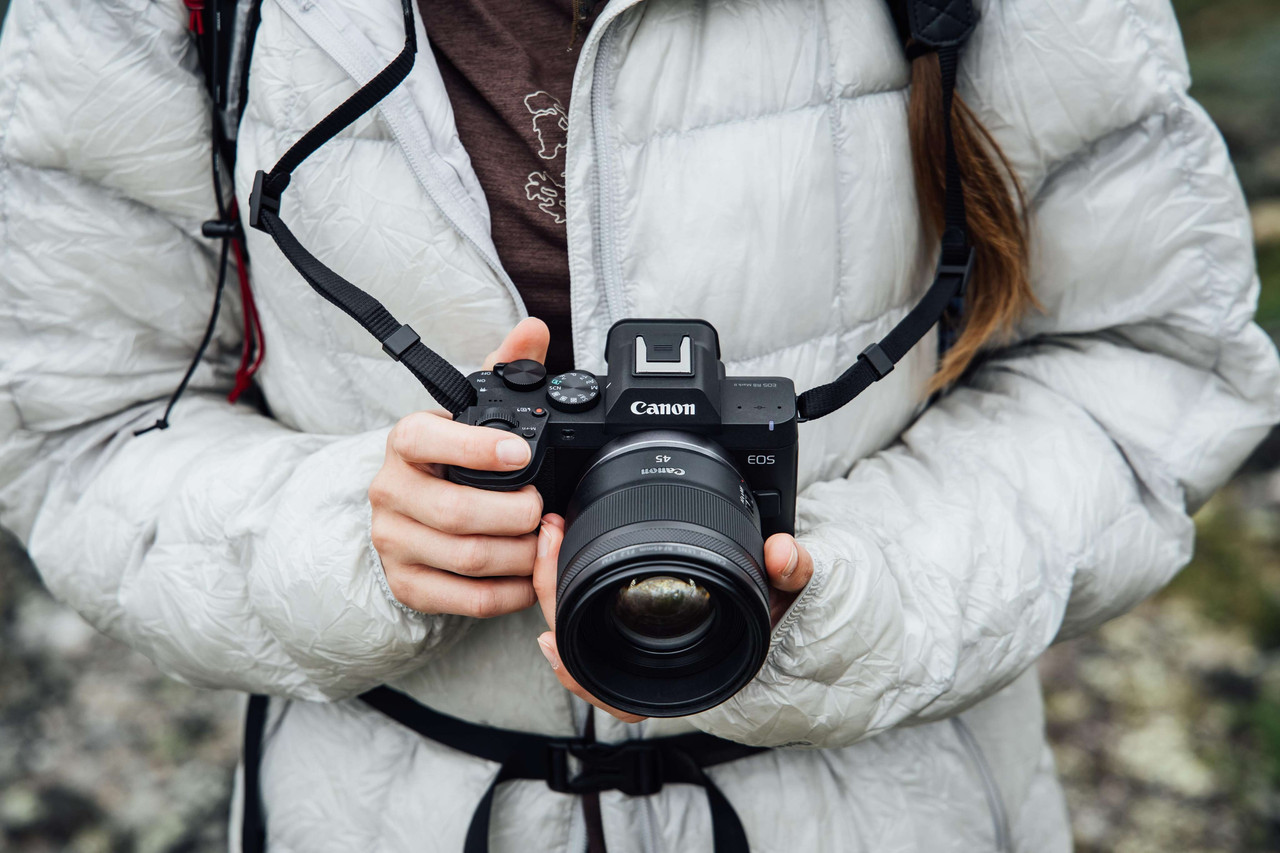
Standout features
The R8 Mark II keeps the original's compact, travel-friendly formula, but this isn't a light refresh. Here's what's actually different.
What's actually new since the original R8
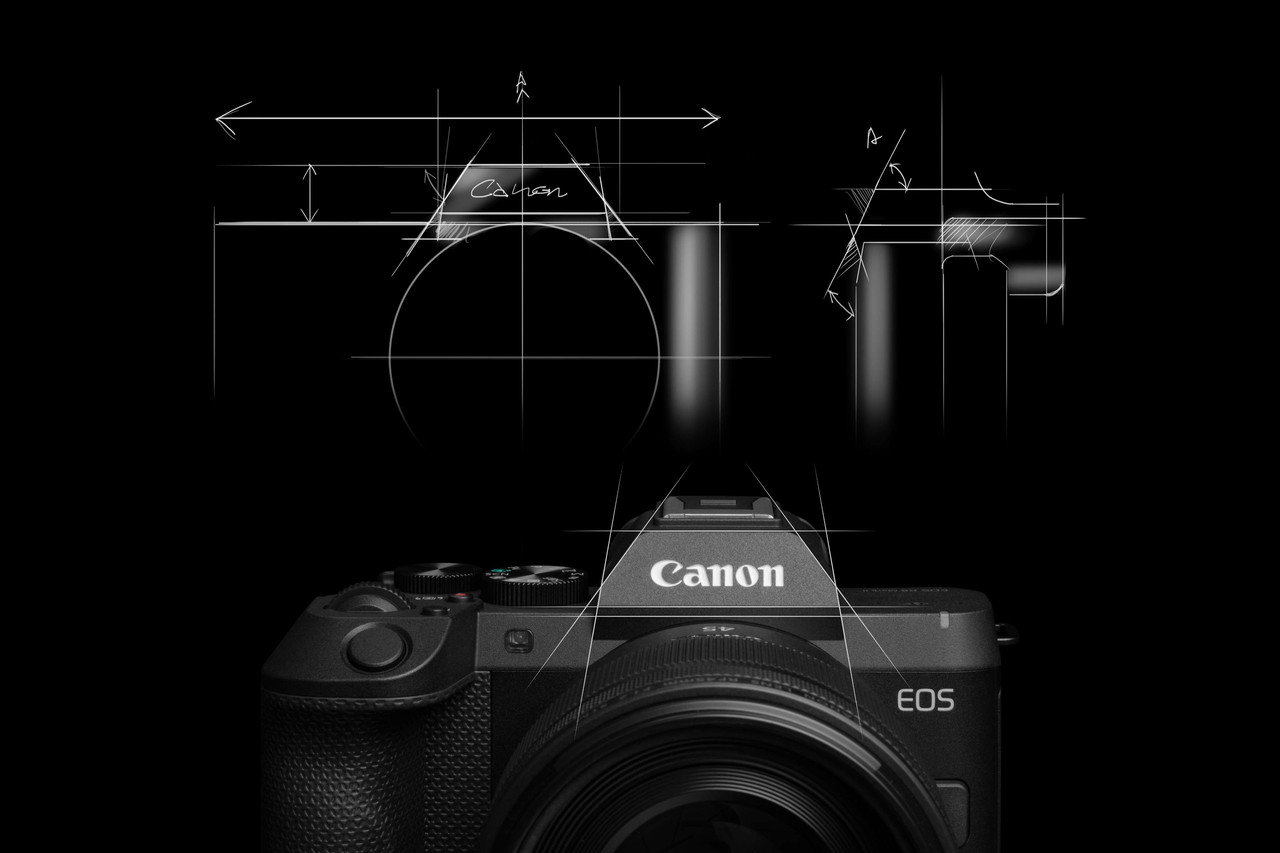
The sensor is unchanged, still 24.2MP full-frame, but almost everything around it has moved. The body itself has been reworked with a more angular shape, a simplified control layout, and a new multi-controller joystick on the back for AF-point navigation, something the original R8 didn't have. The bigger functional change is in-body image stabilisation, added here for the first time, rated at 7.5 stops centre / 7.0 stops peripheral. Autofocus subject detection now recognises animals and vehicles as well as people, and the buffer has grown substantially: Canon quotes roughly a 58% increase for JPEG (up to 190 frames) and 30% for RAW (up to 73 frames) over the original. Burst speed itself stays at the same 40fps electronic-shutter ceiling.
One thing that hasn't changed is the sensor itself, still the same 24.2MP full-frame chip Canon uses across the R8 and R6 Mark II. Here's a look at it, exposed with the lens removed.
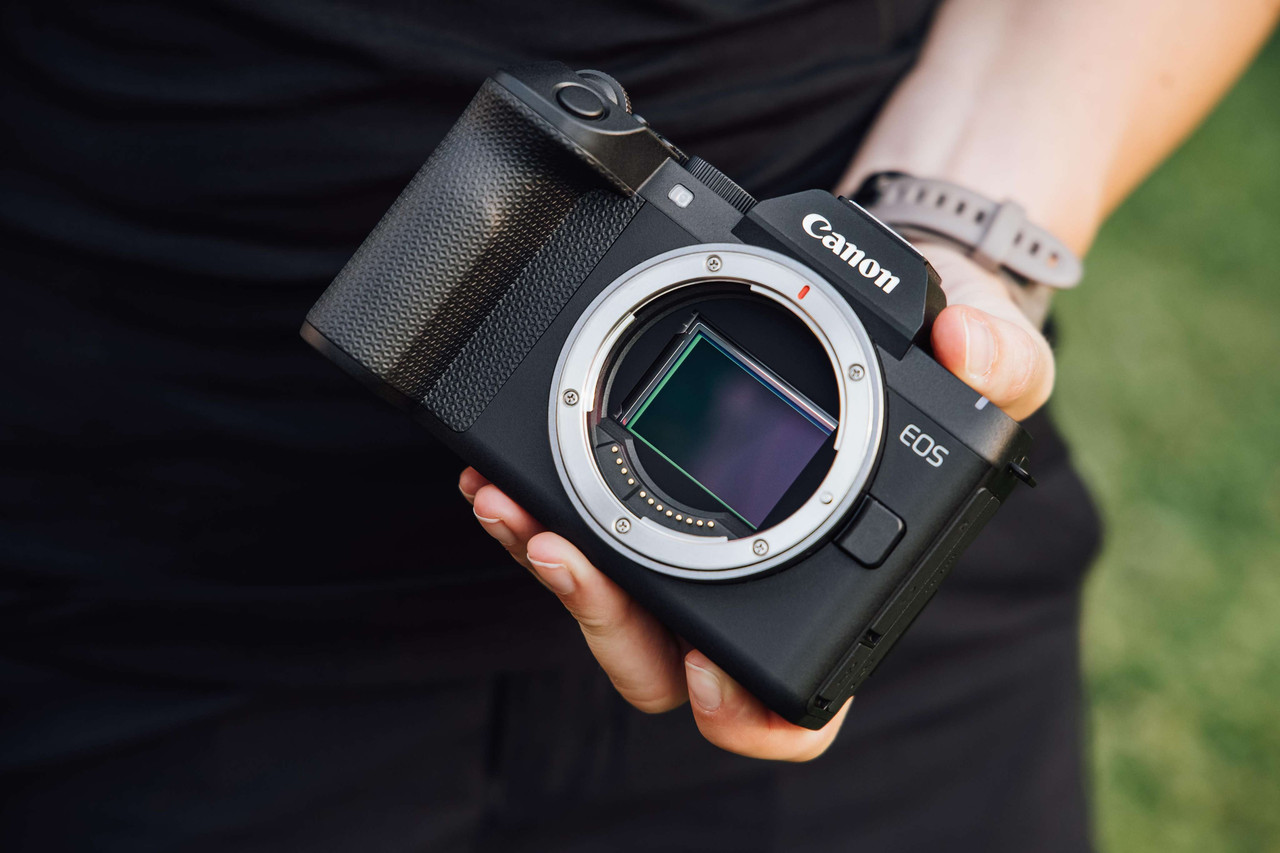
A full-frame sensor built for cleaner low light
The 24.2MP full-frame sensor is tuned for rich detail, natural colour and pleasing background blur, and its larger surface area produces cleaner results in dim conditions than a cropped-sensor camera can manage, well suited to portraits, travel photography and everyday shooting alike. Native sensitivity runs from ISO 100 to 102,400, expandable to ISO 204,800 for genuinely difficult lighting.
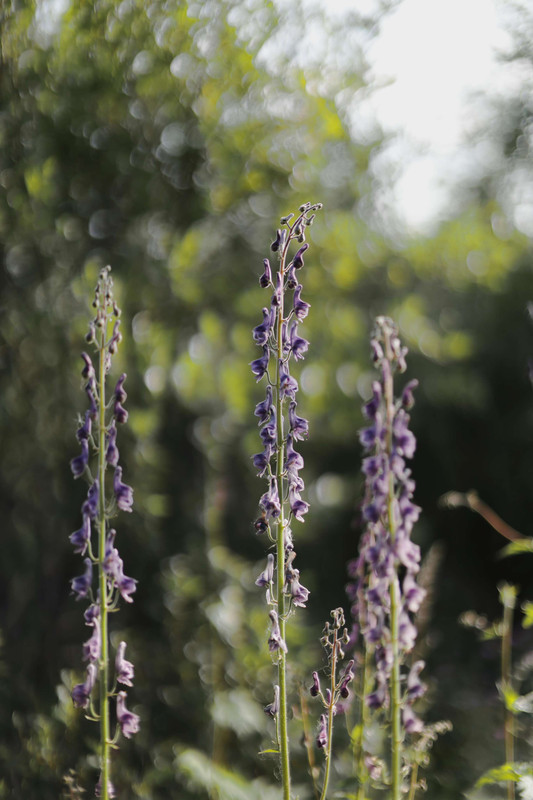

Autofocus that doesn't lose track
Dual Pixel CMOS AF II tracks people, animals (dogs, cats, birds and horses) and vehicles (motorsports cars, motorcycles, aircraft and trains) across 1,053 available AF areas, sensitive down to EV -7.5 for stills. A dedicated people-priority function lets you register and prioritise focus tracking for up to 10 people, so they stay locked in focus even in a packed street or a crowded landmark while everything else moves around them.
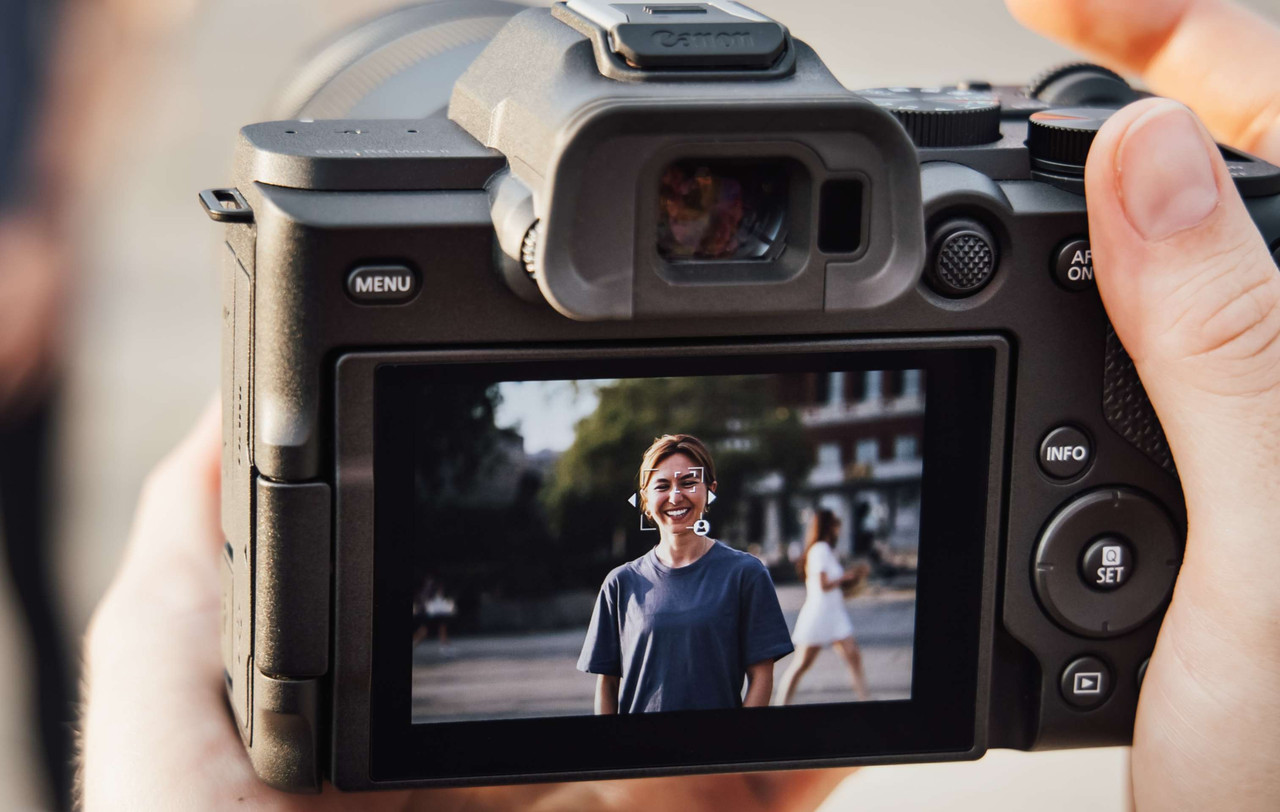
Built for the moment that almost got away
Shoot up to 40fps with the electronic shutter to catch the exact instant a scene comes together, and pre-continuous shooting captures up to 20 frames before the shutter button is fully pressed, so a bird taking flight or a passing glance doesn't get missed. Buffer depth runs to 1,000+ frames with the electronic 1st-curtain shutter, or 190 JPEG / 73 RAW frames at the full 40fps electronic shutter speed.
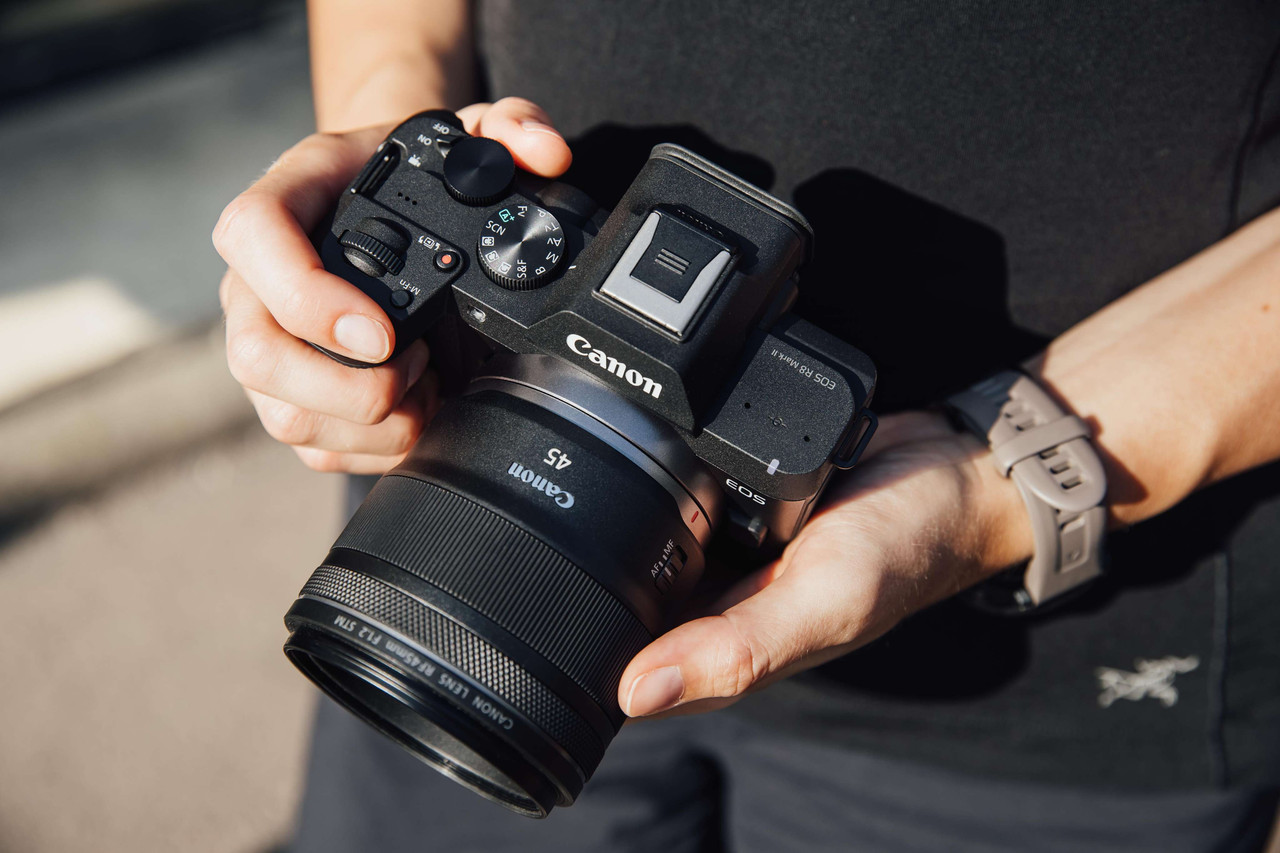
4K 60p video with real room to grade
Internal video is recorded in 6K-oversampled 4K UHD up to 60p for extra sharpness and reduced noise, alongside Full HD recording up to 180fps for slow motion. Shoot in Canon Log 3 for greater dynamic range, or load a custom Look File (LUT) directly onto the camera to preview a creative look in real time and bake it into footage straight out of camera. Footage records in the space-efficient XF-HEVC S codec or the broadly compatible XF-AVC S codec, with clean HDMI output, time code and pre-recording, for up to 6 hours of continuous recording per clip (2 hours in high frame rate modes).
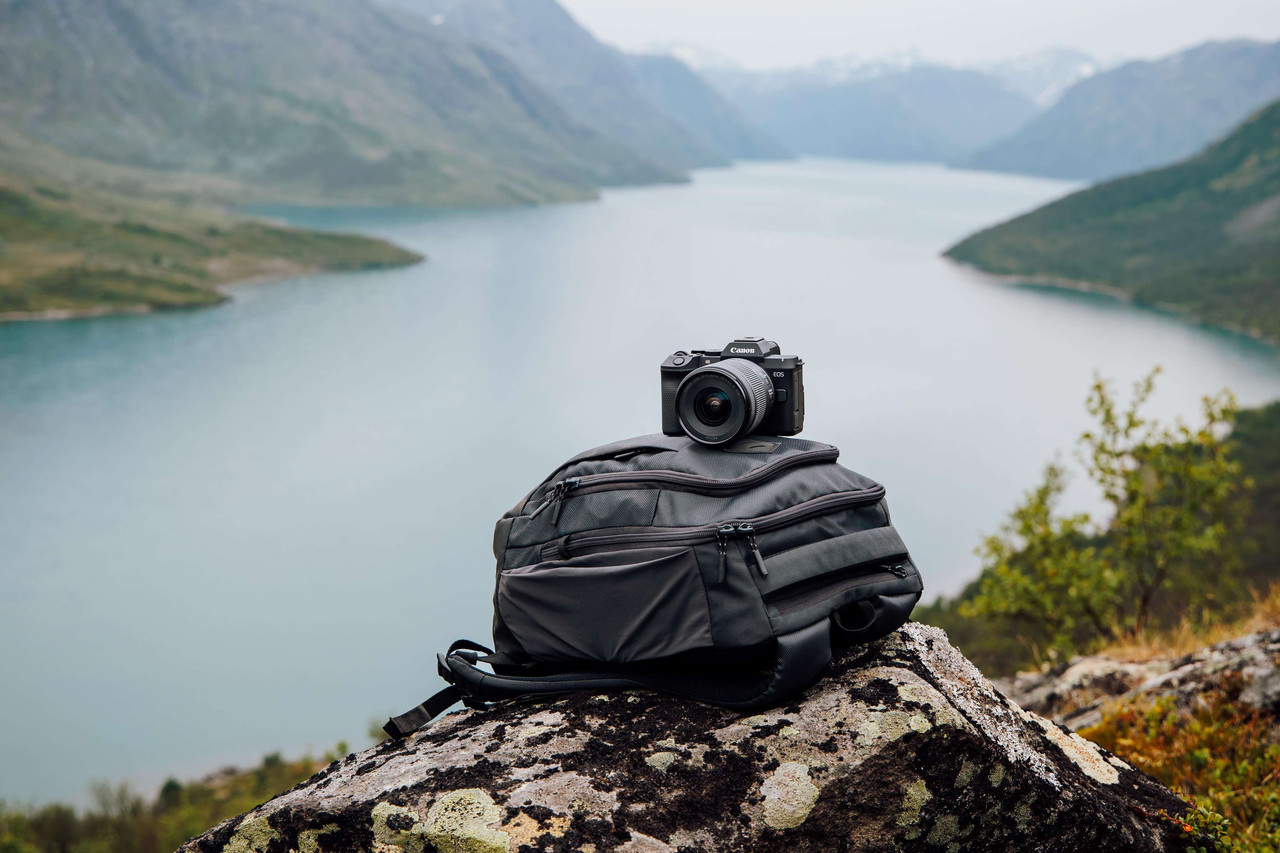
A compact body built for travel
A 0.39" 2.36-million-dot electronic viewfinder gives a bright, detailed eye-level view with a fast 119.88fps refresh rate, and the 3.0" vari-angle touchscreen, at 1.62 million dots, flips out for front-facing recording, high and low angle shooting, and touch-based menu navigation. At 546g body only, it's genuinely light to carry all day without giving up a full-frame sensor.
Wi-Fi, Bluetooth and remote control
Built-in Wi-Fi and Bluetooth 5.3 connect to the Canon Camera Connect app for browsing and transferring images, adjusting settings, viewing a live feed and updating firmware, plus support for USB video calls and streaming. Paired with the optional BR-E2 Bluetooth remote, the camera can be triggered in any drive mode, with movie start/stop and digital zoom control built in.

The RF 24-50mm f/4.5-6.3 IS STM Lens, in more detail
The kit lens is a lightweight, compact standard zoom covering wide-angle to normal-view focal lengths, designed for everyday use and well suited to landscapes, cityscapes, street scenes, portraits and vlogging. An STM stepping AF motor gives fast, smooth and near-silent autofocus for both stills and video, and an Optical Image Stabilizer compensates for up to 4.5 stops of camera shake on its own. Paired with the R8 Mark II's own in-body stabilisation, it's a genuinely pocketable everyday combination that doesn't ask much of the bag it travels in.
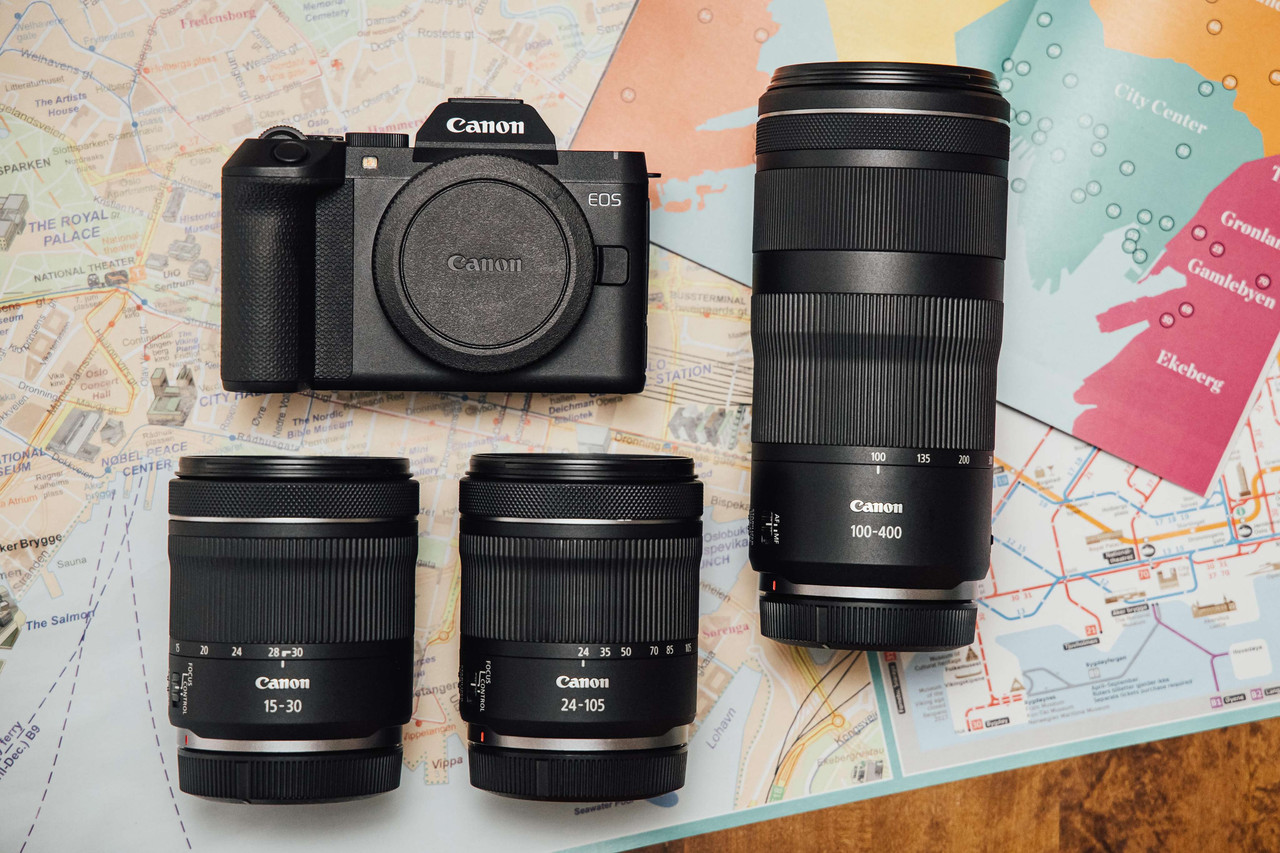
Picking your R8 II
Both configurations are the exact same camera underneath, the only difference is whether glass comes in the box. If you're already shooting Canon RF and have a lens or two covering everyday focal lengths, body-only saves you paying for glass you don't need. If you're starting from scratch, or want one lens that's genuinely happy to stay on the camera day to day, the RF 24-50mm kit lens is a lightweight, unfussy standard zoom that covers most everyday shooting without adding meaningful bulk, and it works out cheaper bundled than buying the two separately.